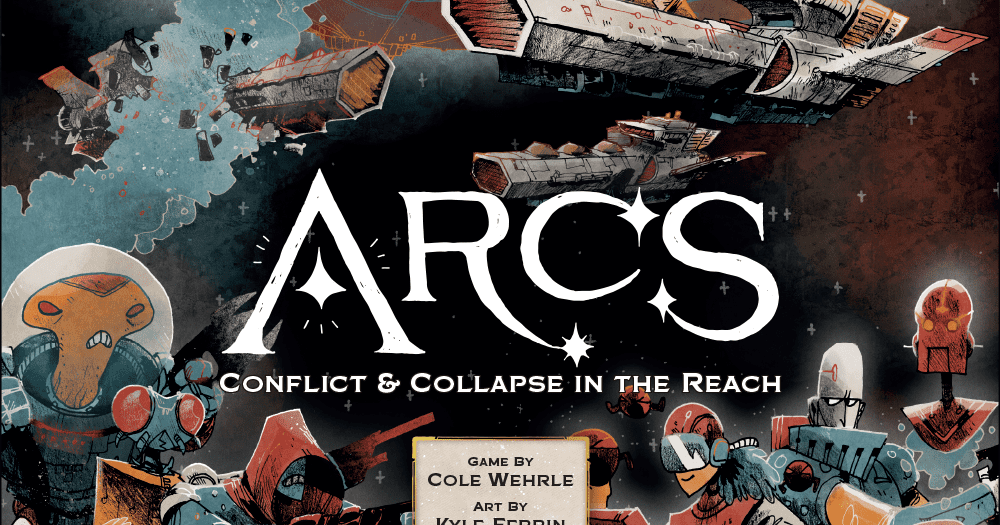
I want the excuse on record before I get to any criticism: we sat down to learn this at 1 AM thinking we’d get through a demo round, and finished at 6 AM because nobody wanted to stop. That’s the strongest recommendation I can give a game with this much of a learning curve, that the process of figuring it out was itself part of the fun rather than a barrier to it.
The core system, using cards as a trick-taking mechanism to determine turn actions, is genuinely clever, “every hand is bad, every hand is good” is a phrase I’ve now said out loud at my own table more than once, describing how the same cards can be an asset or a liability depending entirely on what everyone else is holding. Layered onto area control and fleet combat, it produces the specific kind of tactical, moment-to-moment thinking that Brass rewards you for planning around instead, a different muscle than the strategic long game.
Where it earns real criticism, and I’ve seen enough other tables report the same thing to trust it’s structural rather than a fluke of one bad game: the game can tip hard against whoever’s already behind, other players gang up on the weaker position because the system rewards it, which turns a losing position from merely difficult into essentially unrecoverable more often than I’d like. It’s tactical enough that this doesn’t ruin every game, but it’s happened often enough at my table to be a real asterisk.
Get the Leaders & Lore mini-expansion at minimum, it adds asymmetric flavor to the base rules rather than a whole new system, which is exactly the right amount of complexity to add on top of an already dense base game. Four stars, and a genuine one-more-round kind of night once it clicks.