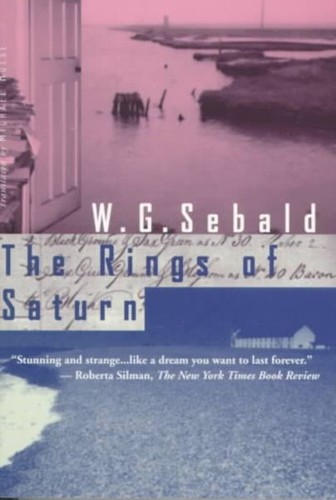
This is technically a novel and I want to flag that upfront because I went in expecting something closer to a plotted story and got, instead, a man walking the East Anglian coast and free-associating his way through Thomas Browne’s skull, the Chinese Empress Tzu Hsi, the herring industry, and a town that quite literally fell into the sea over the course of a few centuries. There’s no chapter that announces its subject before it wanders into three others.
It should not work as well as it does. I kept a notebook going, the way I do for reference desk questions I want to follow up on later, jotting down names to look up afterward, and there’s a real pleasure in that kind of reading even when it slows you down. One thing I didn’t expect going in: how physical the effect of it is. There’s a strange sympathetic-nervous-system quality to Sebald’s prose, the way scratching an itch on your foot can somehow make your scalp tingle, that’s the closest comparison I’ve got for how one seemingly unrelated digression kept setting off a resonance three chapters later.
I’d read Thomas Browne’s Urne-Buriall first if you can manage it, which I hadn’t, and which I think cost me some of the book’s full effect, apparently reading this without Browne under your belt is a bit like reading Ulysses without the Odyssey. My one real complaint is structural rather than substantive, the paragraph breaks are sparse enough that a chapter can feel like it’s refusing to end, and on a tired night that worked against me more than the content ever did.
Four stars. It’s not a book I’d hand to someone looking for a plot, but as an experience in sustained melancholy attention, I haven’t read anything quite like it since.