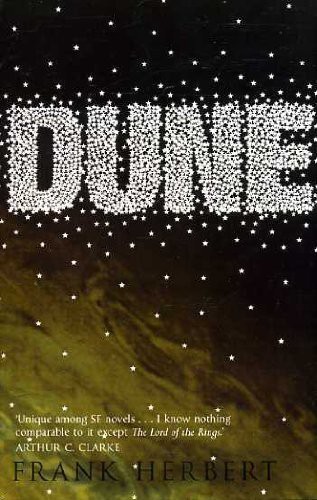
I want to be honest about something upfront: it took me two abandoned attempts spread over about five years to actually get through this one, and I don’t think that’s just me being a slow reader. The prose jumps from inside one character’s head straight into another’s mid-scene, no line break, no signal, and it took real conscious effort to stop being annoyed by that and start just following it. Once I stopped fighting the POV shifts it got much easier, but I’m not going to pretend that adjustment wasn’t work.
What actually kept me reading, once I was in, was how little the book cares about making Paul a comfortable hero to root for. He doesn’t cleverly outsmart his way to power, he becomes something closer to a messiah figure the plot itself seems suspicious of, and the political and ecological machinery underneath the story, the spice economy, the water discipline, the sandworm life cycle, is dense enough that I found myself rereading paragraphs on purpose rather than out of confusion, just to catch things I’d missed the first time. That’s a rare kind of density, the good kind.
The parts that dragged for me were the same ones a friend of mine flagged when she gave up on the audiobook halfway through, the middle stretch after the family’s fall from power, before Paul’s arc really accelerates, felt like it needed another editing pass. And Jessica basically disappears from the story’s emotional core for long stretches, which a lot of readers besides me have noticed and which still bugs me.
Four stars. It’s a genuine classic and I understand exactly why, but I don’t think it’s an easy book, and anyone who tells you it reads effortlessly on a first try is remembering their own experience more generously than mine went.